
Source: VMT*, text: Carmen Groeneveld, publication date: 4 February 2026
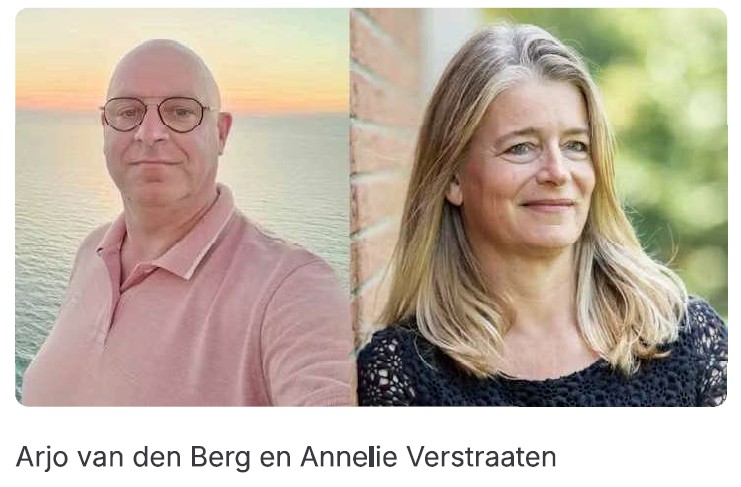
The Packaging and Packaging Waste Regulation (PPWR) will be introduced in phases from 2026 onwards and places high demands on food producers. Packaging producers are also taking major steps to comply with the PPWR. What challenges are they facing in the run-up to the new legislation? VMT spoke with Arjo van den Berg (QA Manager) and Annelie Verstraaten (Strategic Marketing Development Manager) of Hordijk Verpakkingen.
According to Van den Berg and Verstraaten, Hordijk welcomes current and upcoming legislation. “As Hordijk, we want to move towards a sustainable circular future, and legislation certainly plays a role in that. It helps us innovate throughout the value chain. At the same time, it also protects the European market from imports of goods that do not comply with the PPWR,” Verstraaten explains. According to Van den Berg, the producer sees legislation as an opportunity, as sustainability is an important policy pillar for Hordijk.
Conflict between PPWR and food contact materials legislation
Hordijk has been actively preparing for the PPWR legislation for several months. For food packaging, however, Verstraaten sees a conflict between regulations. “According to the PPWR, mandatory quantities of Post-Consumer Recyclate (PCR) must be used in, among other things, plastic food packaging. This concerns the food-safe application of recyclate. The guidelines for food-safe plastic recyclate impose strict requirements on waste processing: it must originate from source-separated waste streams. There are also strict requirements regarding origin: 95% of the recyclate must previously have been food packaging. This is difficult to demonstrate. At present, this is only permitted for part of PET. Developments are underway for other plastics, but these are not permitted for food packaging under the food contact materials legislation (Regulation (EU) 2022/1616).”
PCR in food packaging
Verstraaten therefore questions how sufficient PCR of the required quality for food-safe applications will be available in the future. Van den Berg adds: “In PP, we can use recyclate for non-food packaging. In HDPE, this is also permitted for non-food packaging, but not for food packaging. We have to continuously navigate between what is and is not allowed. The addition of recyclate results in a CO₂ footprint reduction within the context of the CSRD. However, PCR is more expensive than virgin material. Although its mandatory use in packaging only starts in 2030, we already need to anticipate this. At the same time, this currently does not align with the food contact materials legislation for all plastic types.”
Who is responsible for the packaging dossier?
According to Van den Berg, there is also sometimes a lack of clarity regarding definitions in the PPWR. “The manufacturer is not the producer of the packaging material. Therefore, we do not have to issue a declaration stating that we comply with the PPWR. A brand owner, such as a retailer, must ensure that everything is placed on the market correctly and must be able to issue the final declaration of conformity. They collect information via the producer of the packaged product, and that producer obtains the information from us. Our tray may comply with the PPWR, but that is not how it reaches the market. The producer may add a seal or label, and we have no insight into that. The final producer must indicate, via a packaging dossier, whether the end product as placed on the market complies with the PPWR.”
On paper, the PPWR works, but in practice we are still encountering implementation problems
Annelie Verstraaten, Strategic Marketing Development Manager at Hordijk Verpakkingen
What is PCR?
Van den Berg highlights another ambiguity in the PPWR, namely the definition of PCR. “We supply trays to the customer. The customer has production waste. We then get that material back. That is not PCR, because it is industrial,” the packaging expert explains. “If that same tray had been passed on to the consumer and the consumer returns it, it suddenly becomes PCR. In the case of a recall, everything from the producer’s own stock is not PCR. The same product and material — but removed from the chain at a different moment.”
‘New’ technologies
According to the experts, material streams from household waste are currently still difficult to convert into usable PCR. “On paper, the PPWR works, but in practice we are still encountering implementation problems,” Verstraaten states. The biggest issue is that the method by which PCR may be processed in food packaging under the food contact materials legislation has not yet been formally approved. Will this happen in time? “If the PPWR becomes leading, then the food contact materials legislation must be adapted accordingly. And if that cannot be adapted, then the PPWR must be adapted,” Van den Berg states. According to Verstraaten, many new technologies are being tested for PE and PP to process PCR. However, these technologies are not yet approved for use in food packaging before 2030. According to Van den Berg, these are technologies that have been used for years in other packaging streams, but are not yet permitted for food packaging.
Biobased raw materials and re-use packaging
Nevertheless, according to Verstraaten, the PPWR also offers opportunities. “The legislation currently only makes general statements about biobased, i.e. renewable, raw materials. These will be further elaborated in the future. We already see opportunities and developments in this area. We are already testing various biobased raw materials on a larger scale and are running projects with chain partners and universities.” In addition, the packaging producer is also looking at re-use. “We can, of course, already re-use bottles. But it would be great if this could also be done in the future with a tapas or salad tray.” To make this possible, collection systems would need to change. According to the packaging producer, pilots are already underway in Europe. “In a re-use system, packaging is always at people’s homes. That means you need five to ten times more packaging. There is still a lot to learn and develop here.”
We need to source PCR outside Europe — and that is possible as long as Europe keeps its borders open
Arjo van den Berg, QA Manager at Hordijk Verpakkingen
Availability of PCR
When it comes to complying with the PPWR, time ultimately appears to be the biggest challenge. Will it be possible to meet all requirements in time? And can we innovate quickly enough to make sufficient PCR available for PP and PE? In the longer term, according to the experts, we need to move towards tray-to-tray recycling to meet demand. “By 2040, 65% recyclate must be used in a PET bottle and 50% in other PET food packaging. Even if all PET bottles are recycled, you do not get 100% of the material back. To process such high percentages of recyclate, we need to move towards a tray-to-tray stream.” Many countries want to use PCR but do not produce enough of it. “The question will be what countries want and what comes back as usable recyclate. In the longer term, we will get quite far, but not before 2030–2045,” Verstraaten states. Van den Berg adds: “We need to source PCR outside Europe. As long as no additional requirements are imposed on foreign materials, the world is large enough.”
Five tips
The packaging experts conclude with several tips for food producers regarding packaging and the PPWR:
- “Make sure you receive up-to-date information. What is happening in the field of the PPWR?” Verstraaten advises.
- “Make choices: decide what you will and will not address in your packaging policy in light of the PPWR,” Van den Berg adds.
- “Assign responsibility for the implementation of the PPWR. Appoint a responsible person and develop your own step-by-step plan for implementing the PPWR,” Van den Berg continues.
- “Think in steps. Immediately adding 50% PCR to your packaging is good for the PPWR. But for the CSRD, you need to show that you are making progress every year. Steps of 10% allow you to improve over five years,” Van den Berg explains.
- “There is still a lot of uncertainty. But do not wait until everything is clear and fully worked out. Develop a strategy now and start taking steps,” Verstraaten concludes.
*VMT is a Dutch trade magazine and online platform for professionals in the food industry.